Why stockpile inventory is the most error-prone number on the mine balance sheet
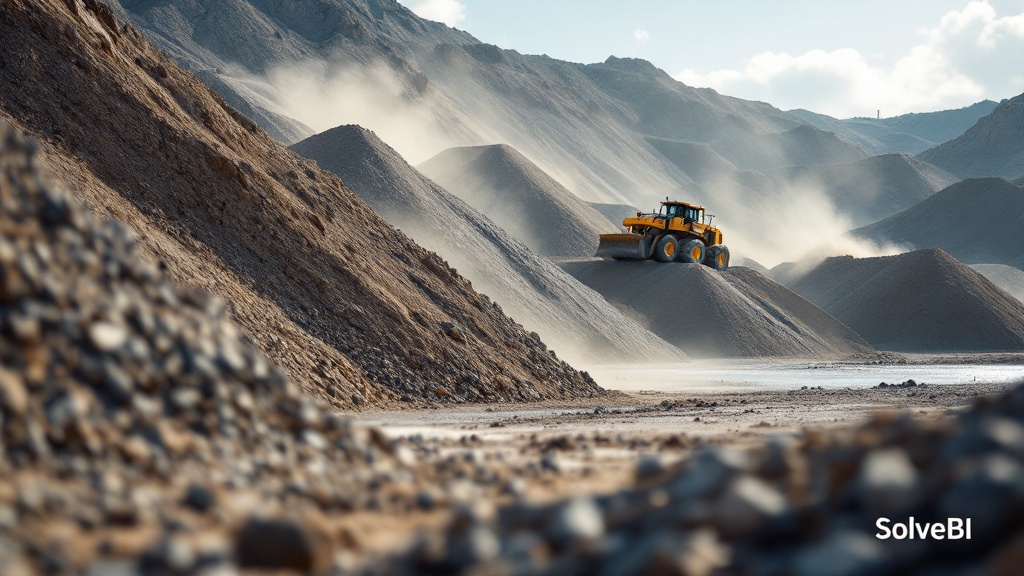
Ore stockpiles sit at the awkward intersection of operations and accounting. To the plant they are a feed buffer; to the mine they are a place to put ore the plant cannot take yet; to finance they are inventory carried at a value on the balance sheet. The problem is that the tonnes and grade in a stockpile are never directly measured in real time - they are inferred from a running balance of every tonne added (from dispatch and grade control) and every tonne reclaimed (often estimated). Each movement carries a small error, and those errors compound. By the time the annual survey is flown, the book balance and the surveyed reality can differ by a margin large enough to require a material inventory adjustment.
Best-practice stockpile reporting closes this gap by maintaining a disciplined perpetual inventory - every addition tagged with its source grade, every reclaim deducted on a consistent basis - and reconciling that book balance against survey volumes whenever a survey is available. The result is an inventory number the planner, the metallurgist and the financial controller can all rely on between surveys, rather than three different estimates that only converge once a year.
The metrics that belong on a stockpile and inventory dashboard
- Stockpile balance (tonnes and grade) - current book inventory for every stockpile, with contained metal, updated with each movement
- Movements in and out - additions from dispatch and grade control, and reclaims to the plant, by shift and source
- Book-to-survey reconciliation - the variance between the perpetual book balance and the latest surveyed volume and density
- Grade profile by stockpile - the grade distribution of material in each stockpile, not just an average; essential for blending
- Stockpile ageing - how long material has been stockpiled; relevant where oxidation or weathering affects recovery
- Rehandle volume and cost - tonnes moved more than once and the cost of that double handling
- Available feed by grade band - how many tonnes of each grade band are available to blend into mill feed right now
Book versus survey: keeping the perpetual balance honest
The core discipline of stockpile reporting is the reconciliation between the perpetual book balance and the periodic physical survey. Modern surveys - drone photogrammetry or LiDAR - produce an accurate volume; multiplied by an in-situ density, they give a surveyed tonnage that can be compared to the book balance. A persistent positive or negative gap is diagnostic: a consistent shortfall against survey often points to reclaim tonnes being under-recorded or density assumptions being wrong, while a consistent surplus may indicate additions being double counted. Reporting the reconciliation every time a survey lands - and trending the gap - is what catches a drifting balance long before it becomes a year-end write-off.
From passive storage to active blending and feed management
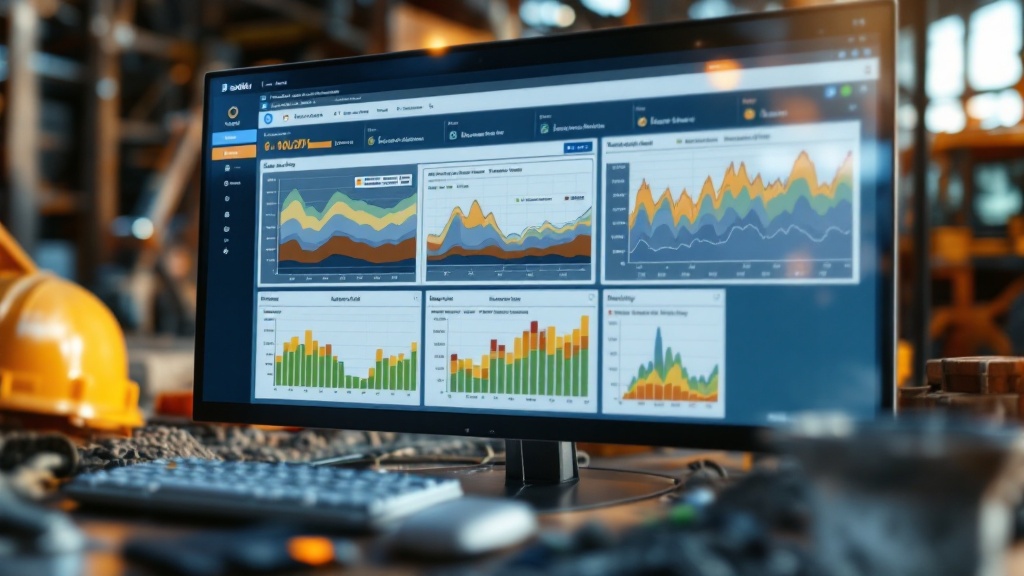
The highest value from stockpile reporting comes when inventory stops being passive storage and becomes an active feed-management lever. When the planner can see exactly how many tonnes of each grade band are available across all stockpiles, the blending decision - how to combine ROM ore, stockpiled ore and direct-tip material to hit the target mill feed grade - becomes a data exercise. This matters most during a mining shortfall: a well-managed set of low-grade and medium-grade stockpiles can hold mill feed grade steady through a period when the pit is not delivering to plan, but only if the dashboard makes the available blend visible in advance rather than after the plant has already drawn the wrong material.
Spreadsheet stockpile tracking vs a perpetual inventory dashboard
Spreadsheet stockpile tracking vs unified inventory dashboard
| Aspect | Spreadsheet tracking | Perpetual inventory dashboard |
|---|---|---|
| Inventory currency | Updated periodically, often lagging | Perpetual - updated with every dispatch and reclaim movement |
| Book-to-survey reconciliation | Annual surprise at the formal survey | Every survey reconciled and the gap trended |
| Grade detail | Single average grade per stockpile | Grade-band distribution for real blending decisions |
| Rehandle visibility | Rarely quantified | Double-handled tonnes and cost tracked explicitly |
| Shared truth | Mine, plant and finance hold separate numbers | One inventory figure across operations and finance |
The Power BI and Fabric architecture behind stockpile reporting
On a typical SolveBI deployment we land dispatch movement records (Modular DISPATCH, Wenco, Minestar), grade control assays for the source material, survey volumes from drone or LiDAR surveys, reclaim records and density data into Microsoft Fabric, then build a perpetual inventory model in Power BI. Mine planning sees available feed by grade band; the metallurgist sees the blend options for target mill feed; the financial controller sees the inventory balance and the survey reconciliation for the period - all from one dataset with consistent movement and grade logic across every stockpile.
Common mistakes in stockpile and ore inventory reporting
- Tracking tonnes without grade. A stockpile balance in tonnes alone cannot support a blending decision or a contained-metal inventory value.
- One average grade per stockpile. Material rarely goes in at one grade; reporting only the average hides the blend that is actually available.
- No book-to-survey reconciliation. A perpetual balance that is never checked against a survey drifts silently until the annual adjustment.
- Reclaim tonnes estimated inconsistently. If reclaim is recorded on a different basis to additions, the balance is wrong from the first movement.
- Rehandle ignored. Double-handled material is a real and avoidable cost that never appears unless it is reported explicitly.
From an annual stockpile survey surprise to a perpetual inventory your planner, metallurgist and controller all trust.
Book a free 30-minute consultation with a SolveBI consultant. We'll map your dispatch, grade control and survey data, agree the right reconciliation structure, and quote a phased Power BI deployment that keeps your ore inventory honest between counts.