Why production and throughput is the number every other decision is measured against
Revenue, royalties, stripping schedules, processing plant budgets and mine-life calculations all trace back to one question: how many tonnes of ore actually came out of the ground, at what grade, and how much metal did the mill recover? In many operations these three figures live in three separate systems - the fleet dispatch system, the grade control database, and the process historian - and are reconciled once a month, weeks after the fact. By the time the shortfall appears in a report, the opportunity to recover production in that period has already passed.
Best-practice production reporting closes this loop. It reconciles dispatch tonnes, ROM pad surveys, mill feed tonnes and metallurgical recovery into one authoritative daily figure - broken down to mining area, bench and ore domain - so production engineers, grade control geologists and plant metallurgists are all working from the same number and can trace any variance back to its source the day it appears.
The metrics that belong on a production and throughput dashboard
- Total material moved (BCM and tonnes) - ore and waste separately, by fleet, area and shift
- Strip ratio - waste BCM per ore tonne, trended against plan; the leading indicator of future mining cost
- ROM delivery (tonnes and grade) - what was dispatched to the pad vs what the plant weighed in
- Mill feed grade and throughput - hourly and daily, against plan, with feed source breakdown
- Metallurgical recovery (%) - actual recovery against the geometallurgical model prediction
- Contained metal produced - the bottom-line output that feeds revenue and royalty calculations
- Variance to mine plan - which areas are ahead, behind, and why - attributed to grade, selectivity or mining rate
Open cut versus underground: different reporting priorities
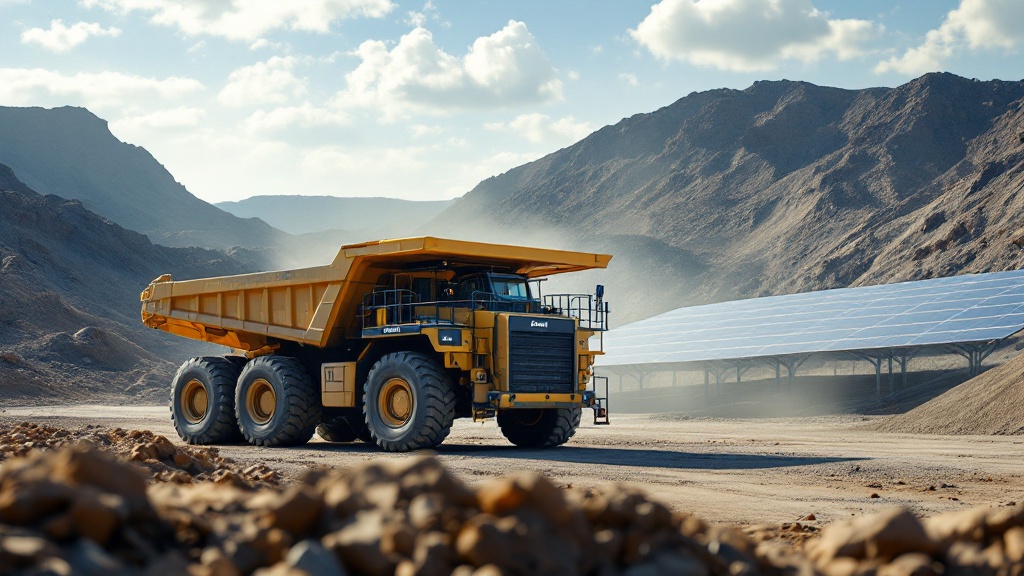
Open-cut and underground operations share the same ultimate question - tonnes, grade and contained metal against plan - but the reporting structure differs significantly. Open-cut reporting centres on fleet productivity: BCM per operating hour, truck cycle time, shovel payload, and the strip ratio trend that drives future mining cost. Underground reporting centres on development metres and stope performance: development advance against schedule, void reconciliation, stope grade and dilution, and the drawpoint management that determines what grade the plant actually receives.
For operations running both open cut and underground simultaneously - a transition common in Australian gold and nickel operations - the dashboard must consolidate production from both mining methods into a single contained-metal figure without obscuring the different drivers behind each.
From mine block model to metal in concentrate: the reconciliation chain

Best-practice mine reconciliation tracks the movement of tonnes, grade and metal through four distinct stages: the geological block model prediction, what was dispatched from the pit (dispatch), what arrived at the ROM pad (survey), and what the mill weighed in at the gate. The ratio of each consecutive pair - the F-factor, GF-factor and metal factor - tells management precisely where the production prediction is breaking down. A low F-factor means either the dispatch record is wrong or tonnes are being lost in handling. A high GF-factor means the ore is above the model grade prediction - or below. Each is a different conversation, and the dashboard makes clear which one the team is having.
Forecast versus actual - attributing the variance
Spreadsheet production reporting vs unified production dashboard
| Aspect | Spreadsheet reporting | Unified production dashboard |
|---|---|---|
| Time to daily production figure | Hours of manual assembly each morning | Automated - reconciled by start of day shift |
| Dispatch-to-mill reconciliation | Monthly, often weeks after the fact | Daily, with gap attributed to source |
| Variance attribution | Reconstructed retrospectively | Attributed to grade, selectivity or mining rate at source |
| One figure for all stakeholders | Operations, planning and finance reconcile separately | One reconciled number shared across all teams |
| Drill-down to mining block | Not possible without raw data access | Any variance drills to the individual block or face |
The Power BI and Fabric architecture behind production reporting
On a typical SolveBI deployment we land fleet dispatch data (Modular DISPATCH, Wenco, Minestar), ROM pad surveys, drill-and-blast records, grade control assay results, and process historian feeds into Microsoft Fabric, then expose a single production model through Power BI. Mine operations see the shift and daily production view; planning and grade control see the reconciliation and forecast-variance view; finance see the contained metal and royalty-calculation view - all from one dataset with consistent logic across mining areas and domains.
Common mistakes in ore production and throughput reporting
- Reporting tonnes without grade. A high ore-tonne week at below-plan grade is a shortfall in metal - not a good week.
- No dispatch-to-mill reconciliation. The gap between dispatch and weightometer disappears into a monthly variance and is never investigated.
- Strip ratio reported in arrears. By the time a deteriorating strip ratio appears in a monthly report, the mining sequence that caused it has already moved on.
- Blending invisible to the dashboard. Ore from multiple sources feeding the mill simultaneously makes grade variance unexplainable without a feed-source view.
- One figure for underground and open cut. Consolidating both methods without a method-level breakdown hides the drivers unique to each.
From a morning spreadsheet scramble to a reconciled ore production figure before first shift.
Book a free 30-minute consultation with a SolveBI consultant. We'll map your dispatch, grade control and plant data, agree the right reconciliation structure, and quote a phased Power BI deployment you can budget against.