Why processing plant reporting is where the ore body meets the balance sheet
A mine's value proposition is simple: dig up ore, put it through a processing plant, and get metal out the other end. The processing plant is where that proposition is tested. Throughput, recovery, concentrate grade and plant availability are the four numbers that determine what the mine actually produces - and every variance in those four numbers flows directly to revenue, cost and metal sold. Yet in many operations the plant management team is running on yesterday's shift report, a clipboard in the control room, and a SCADA screen that shows current state but no historical trend.
Best-practice processing plant reporting connects the historian data that captures every minute of plant operation to the assay results that determine what the plant produced - and links both to the mine feed that drove the plant's performance. When a metallurgist can see throughput, feed grade, recovery and feed hardness in the same dashboard, the conversation shifts from 'we had a bad recovery week' to 'we had a bad recovery week because feed hardness was 15% above plan for the first four days and recovery tracked exactly as the geo-metallurgical model predicts'.
The metrics that belong on a processing plant performance dashboard
- Throughput (t/h and t/day) - actual vs design capacity and plan, by circuit section; the primary plant productivity metric
- Feed grade (assay) - head grade of the material entering the plant, by sample type and frequency; compared to mine plan prediction
- Metallurgical recovery (%) - % of metal in the feed that reports to the concentrate product; tracked against the geometallurgical recovery model
- Concentrate grade - the metal content of the concentrate produced; determines transport and smelting costs
- Plant availability (%) - % of scheduled operating time the plant is available; separated into planned and unplanned downtime
- Reagent consumption (kg/t) - collector, frother, lime and other reagent additions per tonne treated; a direct cost and recovery driver
- Power consumption (kWh/t) - grinding and processing power per tonne treated; a cost indicator and mill efficiency proxy
- Water balance (m³/t) - process water consumption and circuit water balance; both an efficiency and environmental compliance metric
Circuit-by-circuit reporting: where the problem actually is
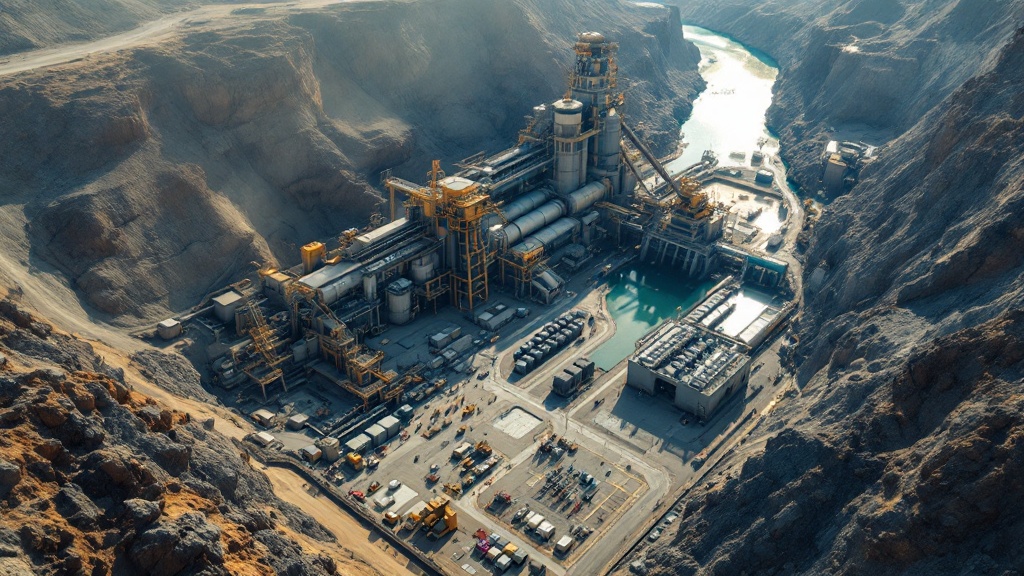
A processing plant is a sequence of circuits - crushing, grinding, classification, flotation (or leaching), solid-liquid separation, and product drying and handling. A throughput shortfall or recovery loss at the overall plant level can originate at any circuit stage, and the treatment is completely different depending on where in the circuit the problem sits. A SAG mill throughput bottleneck is a grinding problem; a flotation recovery shortfall might be a reagent problem, a grind size problem, or a feed mineralogy problem. Circuit-by-circuit reporting breaks the overall plant KPIs into their component stages so the investigation starts in the right place.
Downtime analysis: what is stopping the plant
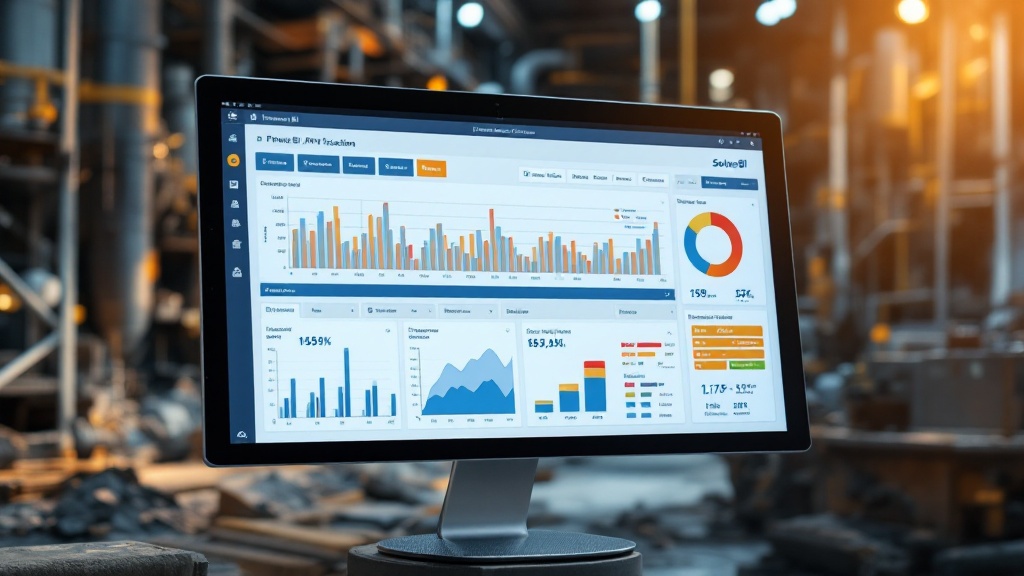
Plant availability is ultimately a function of how many hours per day the plant is not running, and why. Planned maintenance shutdowns, unplanned equipment failures, process upsets, feed supply gaps and operational holds are all different categories of downtime - and each implicates a different management response. A dashboard that classifies downtime by category, by circuit, and by duration makes the primary availability driver immediately visible: is the plant losing hours to maintenance scheduling, to equipment reliability, or to feed supply from the mine?
Shift report vs process historian dashboard: the difference in decision quality
Shift-based reporting vs unified plant performance dashboard
| Aspect | Shift reports | Unified plant dashboard |
|---|---|---|
| Recovery linked to feed characteristics | Not connected - separate shift notes | Automatic correlation - recovery vs hardness, grade, grind |
| Circuit-level bottleneck visibility | Overall throughput only; circuit context in narrative | Throughput, availability and loss attributed by circuit |
| Reagent and power tracking | Calculated periodically from manual records | Updated daily from historian and transaction data |
| Trend visibility (week/month/quarter) | Requires manual compilation across shift reports | Continuous - every historian reading in the model |
| Link to mine feed planning | Plant and mine operate with separate datasets | Feed grade and hardness from mine linked to plant response |
The Power BI and Fabric architecture behind plant performance reporting
On a typical SolveBI deployment we land process historian data (OSIsoft PI, Wonderware, DeltaV, eDNA), laboratory LIMS assay results, CMMS work orders and production system data into Microsoft Fabric, then build a plant performance model in Power BI. The metallurgist sees throughput, recovery and feed characteristic correlations; the plant operator sees circuit availability and current downtime status; the process engineer sees reagent and power efficiency; mine management sees the plant's contribution to overall production - all from one consistent dataset.
Common mistakes in processing plant performance reporting
- Recovery reported without feed characteristics. A recovery number without the feed grade and hardness context that drives it is uninterpretable.
- Throughput reported without availability. A high throughput week at low availability means the plant was running fast when it ran - but it had significant downtime.
- No circuit-level breakdown. A plant-level recovery shortfall could be in flotation, in grinding, or in the feed. Overall reporting does not help the metallurgist find it.
- Historian data not integrated. The most valuable plant data - minute-by-minute operational readings - is almost never connected to the reporting layer.
- Shift reports as the primary reporting tool. A shift report captures the narrative; a historian-based dashboard captures the data. Both are needed, but only one is auditable.
From a shift report to a historian-based plant dashboard that tells the metallurgist what the mine is doing to recovery.
Book a free 30-minute consultation with a SolveBI consultant. We'll map your historian, assay and maintenance data, and design a processing plant dashboard that connects plant performance to its root causes - before the month-end recovery shortfall becomes the story.