Why grade reconciliation is the most strategic reporting discipline in mining
Every mine plan is built on a geological block model that predicts the tonnes, grade and contained metal in every part of the orebody. Mine schedules, processing plant designs, capital expenditure decisions and mineral resource estimates all depend on that model being accurate. Grade reconciliation is the systematic process of comparing the model prediction to what actually comes out of the ground - and it is the most direct feedback loop available between the geological prediction and operational reality.
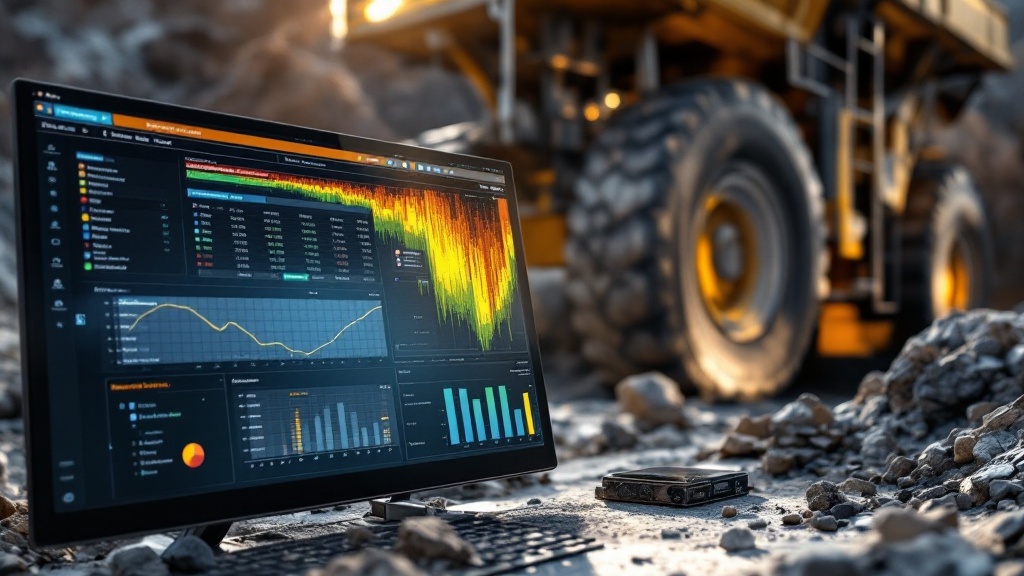
Without a systematic reconciliation framework, a mine that is consistently producing below-model grade will discover the shortfall in annual resource updates or financial performance reviews - years after the decisions that caused it were made. With a monthly, or better weekly, mine-to-mill reconciliation dashboard, the pattern is visible in time to adjust the geological model, the mining method, or the grade control approach before it compounds into a material reserve write-down.
F-factor, GF-factor and metal factor: the three reconciliation numbers
F-factor is the ratio of actual tonnes to model-predicted tonnes for the same mined area or block. An F-factor of 1.05 means 5% more material was mined than the model predicted. GF-factor is the ratio of actual grade to model-predicted grade. A GF-factor of 0.92 means the ore is consistently 8% below the model grade - a significant issue for a gold or lithium operation. Metal factor (MF) is the product of the two: MF = F × GF. It represents the overall reconciliation between predicted and actual contained metal - the number that ultimately flows through to revenue.
The mine-to-mill reconciliation chain: four stages, four questions
Best-practice grade reconciliation tracks the movement of tonnes, grade and metal through at least four stages: the geological block model, the dispatch record (what was mined and sent to the ROM pad), the ROM pad (what was surveyed and characterised), and the mill gate (what was weighed in and sampled). Each transition in the chain asks a different question: Is the geological model right? Is mining selecting the ore as designed? Is ore handling causing mixing or dilution? Is the mill feed representative of what was sent to it? Each question implicates a different team - geology, grade control, mining, metallurgy - and demands a different response.
Breaking reconciliation down by geological domain and mining area
Site-wide reconciliation factors are useful for high-level performance tracking, but they hide the patterns that explain the variance. A GF-factor of 0.94 at the site level might reflect a single geological domain where the grade model is systematically high - while all other domains reconcile accurately. Breaking reconciliation down by geological domain, ore type, mining bench and grade control zone is what converts an aggregate number into an actionable investigation target.
Spreadsheet reconciliation vs a systematic mine-to-mill dashboard
Spreadsheet grade reconciliation vs mine-to-mill reconciliation dashboard
| Aspect | Spreadsheet reconciliation | Mine-to-mill dashboard |
|---|---|---|
| Reconciliation frequency | Monthly, often weeks after the fact | Weekly or daily - variance visible in time to act |
| Factor breakdown | Site-level MF only; F and GF often combined | F, GF and MF at every stage and every domain |
| Domain and area analysis | Requires manual pivot table construction | Drill-through to bench, domain and block group built in |
| Trend visibility | Isolated monthly snapshots | Rolling 12-month trend - persistent bias visible early |
| Shared view across teams | Geology and operations often reconcile separately | One authoritative reconciliation - geology, grade control and plant from the same dataset |
The Power BI and Fabric architecture behind grade reconciliation
On a typical SolveBI deployment we land block model exports (Datamine, Deswik, Vulcan, Micromine), grade control assay data (from the laboratory LIMS), dispatch records and ROM pad surveys into Microsoft Fabric, then build a reconciliation model in Power BI that calculates F-factor, GF-factor and MF-factor at every configured reconciliation stage. Geologists see the domain and bench reconciliation view; grade control sees the dispatch-vs-ROM comparison; metallurgists see the ROM-to-mill-feed reconciliation; management sees the site-level metal factor trend - all from one dataset.
Common mistakes in grade reconciliation reporting
- Reporting metal factor only. An MF close to 1.0 can hide significant F and GF issues that offset each other.
- Monthly reconciliation only. By the time a quarterly average appears, the geological domain or grade control practice driving it has already moved on.
- No domain breakdown. A site-level GF-factor says there is a grade problem somewhere. A domain-level view says where.
- Block model not updated between reconciliations. Comparing actual results against a model that has already been corrected for known bias produces misleading factors.
- Reconciliation owned by one team. Mine-to-mill reconciliation implicates geology, grade control, mining and metallurgy. It should be a shared management review, not one team's monthly exercise.
From a monthly spreadsheet to a weekly mine-to-mill reconciliation view your whole technical team trusts.
Book a free 30-minute consultation with a SolveBI consultant. We'll map your block model, assay, dispatch and process data, and design a grade reconciliation framework that gives geology, grade control and metallurgy one shared picture of the gap.