Why environmental compliance reporting is a risk-management issue, not just a regulatory one
A mining environmental licence is a legal instrument that defines the operating conditions for the mine. Exceeding a licence limit - a blast vibration exceedance at a residence, a PM10 exceedance at the site boundary, or a water discharge above permitted concentration - is a legal event with financial, operational and reputational consequences. In Western Australia, the Department of Water and Environmental Regulation (DWER) issues and enforces these Part V licences under the Environmental Protection Act 1986 - with the authority to impose financial penalties, require operational modifications, or in serious cases suspend operations - while the EPA assesses major proposals under Part IV and DEMIRS regulates environmental conditions attached to mining tenements.
The operational reality is that environmental monitoring generates data from dozens of loggers, meters and sampling points across the site - and that data lives in separate systems, is reviewed infrequently, and is typically compiled into a compliance report well after the fact. A compliance exceedance discovered three weeks after it occurred is harder to explain, harder to defend, and harder to prevent from recurring than one discovered the same day.
The environmental monitoring areas that belong on a mining compliance dashboard
- Water balance - site water storage levels, extraction volumes, dewatering rates, and evaporation; reconciled against approved water use limits
- Dust (PM10 and PM2.5) - real-time and averaged readings at site boundary and sensitive receptor locations; compared to licence trigger levels
- Blast vibration (PPV) - peak particle velocity at the nearest residence and heritage locations for every blast; compared to licence and ISEE limits
- Blast overpressure (dB(L)) - airblast overpressure alongside PPV for each blast; plotted against consent thresholds
- Noise (LAeq and Lmax) - ambient and operational noise at sensitive receptors; tracked against EPA noise limits and licence conditions
- Water discharge quality - pH, turbidity, conductivity and metals in any permitted surface or groundwater discharges; compared to licensed limits
- Licence condition register - status of each licence condition: compliant, approaching trigger, or in exceedance - with the evidence record attached
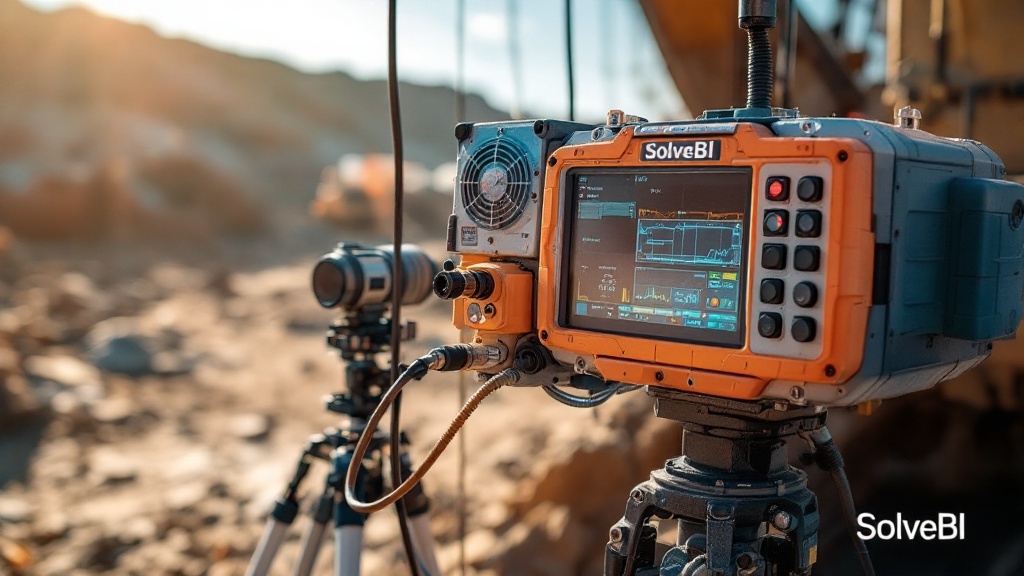
Blast vibration and overpressure: every event on the record
Every blast at a mine site generates a PPV and overpressure reading at the nearest sensitive receptors. These readings are a legal record - they must be retained, reported and, where they exceed licence limits, notified to the regulator and potentially to affected community members. A reporting system that logs every blast event against its monitoring result, flags exceedances automatically, and maintains the evidence trail in one searchable database is far more defensible than a collection of vibration logger exports living in a folder on someone's desktop.
The licence condition register: always audit-ready
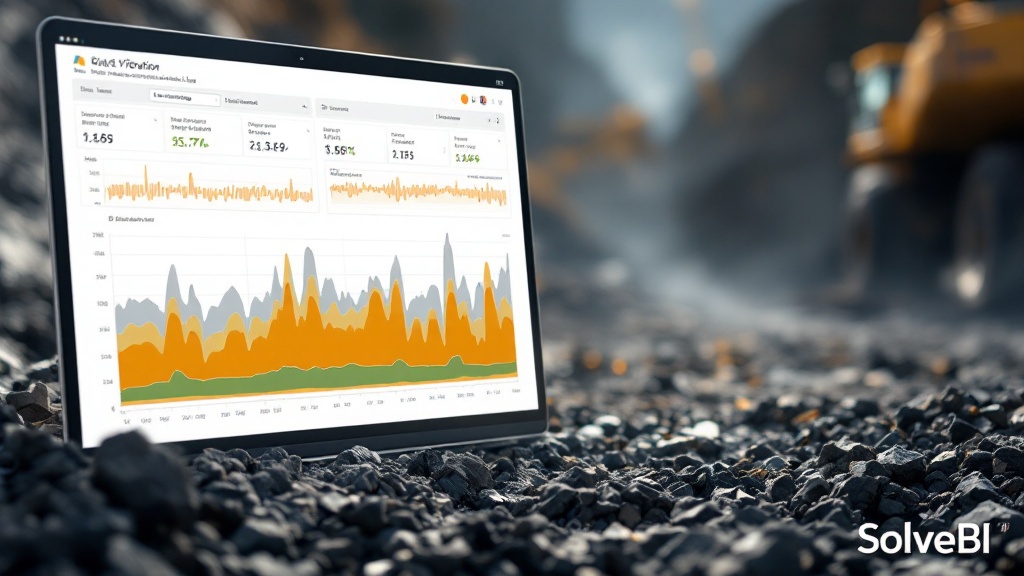
An environmental licence for a major mining operation may contain 50–200 individual conditions: monitoring frequencies, reporting obligations, trigger levels, operational restrictions and commitments to specific management measures. Tracking compliance against each condition individually - and maintaining the evidence trail of monitoring results, inspection records and management actions that demonstrates compliance - is a significant administrative burden without a systematic reporting structure. A compliance register dashboard that shows the current status of every condition, the date of the last verification, and the supporting evidence record is what makes an environmental audit a routine review rather than a crisis exercise.
The Power BI and Fabric architecture behind environmental compliance reporting
On a typical SolveBI deployment we integrate environmental data logger feeds, vibration monitor exports, water meter readings, laboratory LIMS results and the compliance condition register into Microsoft Fabric, then build a compliance dashboard in Power BI. Environmental officers see the real-time monitoring status and trigger-level proximity; site management sees the licence condition register and exceedance history; the environmental manager sees the trend analysis needed for regulator reporting - all from one dataset.
Common mistakes in mining environmental compliance reporting
- Monitoring data reviewed infrequently. Exceedances discovered days after the event are harder to manage and explain than those caught in real time.
- Compliance register maintained in a spreadsheet. A shared spreadsheet with 150 licence conditions, evidence attachments and action owners is not audit-ready; it is an audit risk.
- No trend analysis on trigger-level proximity. A PM10 reading at 90% of the trigger level is a warning; a trend of readings at 85–90% over three weeks is an imminent exceedance.
- Water balance updated quarterly. A water balance that is only reconciled at quarterly reporting often discovers non-compliance too late to manage.
- Blast records in logger exports, not a central system. Seismograph exports on a local drive are not evidence of compliance - they are evidence that evidence exists somewhere.
From scattered monitoring data to a live compliance dashboard that is always audit-ready.
Book a free 30-minute consultation with a SolveBI consultant. We'll map your monitoring systems, licence conditions and environmental data sources, and design a compliance dashboard that gives you real-time visibility of where you stand against every licence obligation.